One quiet economic shift that will reshape Indian D2C
Most people read the headline and move on. The founders who read the second-order effects are the ones who'll still be here in two years.
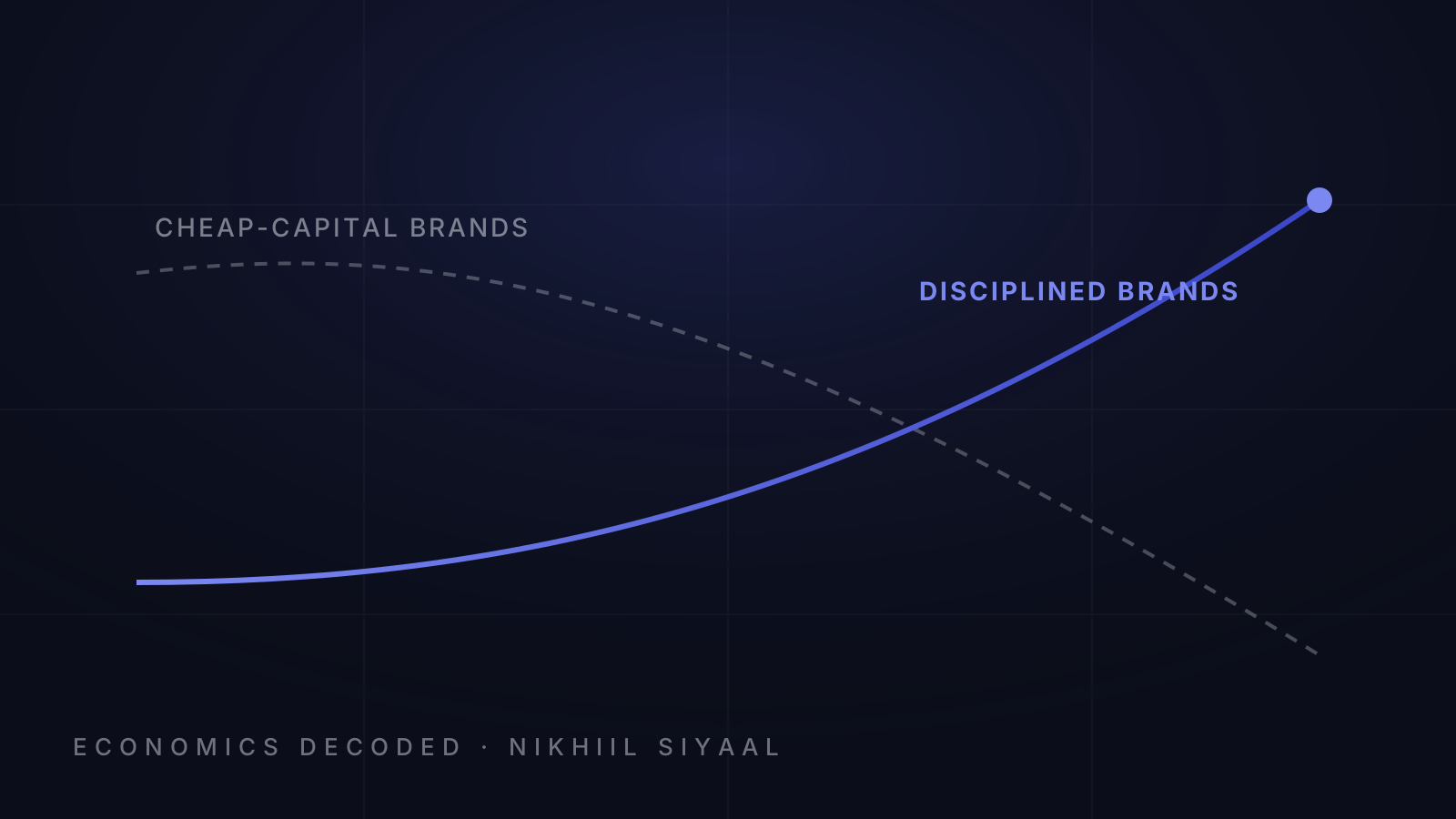
Here's the conclusion first, because that's how I like to write: the cheap-capital era that built a thousand D2C brands is over, and the brands built only for that era won't make it.
What changed
For years, growth was funded by patient money that didn't ask hard questions. Acquire customers now, worry about profit later. That worked when capital was cheap and abundant.
When the cost of money rises, the patience disappears. Suddenly every brand is asked the same question at once: can you make money on a customer without a discount?
The second-order effect
This is where it gets interesting. As weak brands pull back ad spend, the cost of advertising drops for the disciplined ones who stayed profitable. The strong don't just survive the squeeze - they get cheaper growth out of it.
Downturns don't kill good businesses. They hand them the market share of the bad ones.
What to do about it
- Know your contribution margin cold. (See: unit economics.)
- Treat every discount as a loan you're taking from your future margin.
- Build the brand people pay full price for - that's the only moat a rate cycle can't erode.
Most people won't see this coming. You will.

Serial entrepreneur · building companies, brands, and AI products.
Keep reading
How to validate a startup idea in India - before you build anything
Most startup ideas die from building too early, not too late. Here's the exact validation playbook I use: 100 conversations, 10 pre-orders, then - and only then - a product.
Brand buildingPersonal branding for founders: your story is a distribution channel
Founders treat personal branding like vanity. It's actually distribution - the cheapest CAC you will ever own. Here's how a founder's story compounds into customers, hires, and capital.
Economics decodedBootstrapping vs venture capital in India: the honest math
Raise VC or bootstrap? Most advice is ideology. Here's the actual arithmetic - ownership, growth speed, and exit outcomes - so you can pick the funding path that fits your business.