Unit economics, explained like you're a smart friend
CAC, LTV, contribution margin - the words sound scary. The idea behind them fits on a napkin. Here's the napkin.
Most founders can recite the acronyms. Far fewer can answer the only question that matters: does this business make money on each customer, before we talk about scale?
Start with one customer
Forget the spreadsheet. Take a single customer. What did it cost you to get them, and what do they pay you over their life with you?
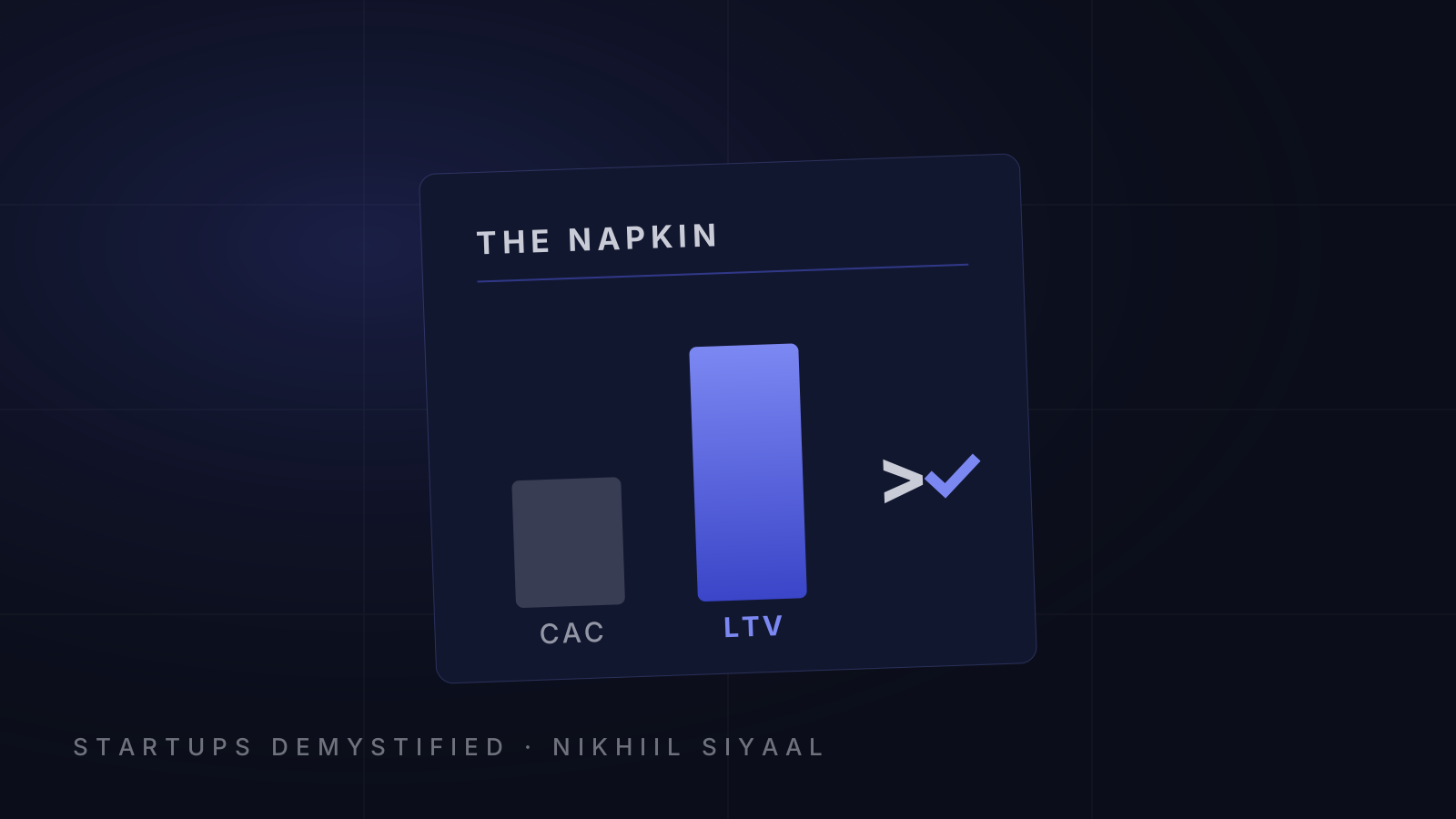
- CAC - what you spent to acquire them (ads, sales, the dinner you bought).
- LTV - what they pay you over time, minus what it costs you to serve them.
If LTV is comfortably bigger than CAC, you have a business. If it isn't, you have a hobby that burns money faster the more you grow.
The trap of "we'll fix it at scale"
Scale doesn't fix broken unit economics. It multiplies them. If you lose ₹100 per customer, ten thousand customers is a ₹10 lakh hole, not a milestone.
The fastest way to go bankrupt is to sell something profitable-looking at a loss, very efficiently.
What I actually watch
- Contribution margin - revenue minus the variable cost to deliver. Positive, ideally healthy.
- Payback period - how many months until a customer repays their CAC. Under 12 is comfortable.
- The trend - are these getting better or worse as you grow?
Get these three honest, on a napkin, before you raise a rupee. The investors who matter will ask anyway.

Serial entrepreneur · building companies, brands, and AI products.
Keep reading
How to validate a startup idea in India - before you build anything
Most startup ideas die from building too early, not too late. Here's the exact validation playbook I use: 100 conversations, 10 pre-orders, then - and only then - a product.
Brand buildingPersonal branding for founders: your story is a distribution channel
Founders treat personal branding like vanity. It's actually distribution - the cheapest CAC you will ever own. Here's how a founder's story compounds into customers, hires, and capital.
Economics decodedBootstrapping vs venture capital in India: the honest math
Raise VC or bootstrap? Most advice is ideology. Here's the actual arithmetic - ownership, growth speed, and exit outcomes - so you can pick the funding path that fits your business.