Bootstrapping vs venture capital in India: the honest math
Raise VC or bootstrap? Most advice is ideology. Here's the actual arithmetic - ownership, growth speed, and exit outcomes - so you can pick the funding path that fits your business.
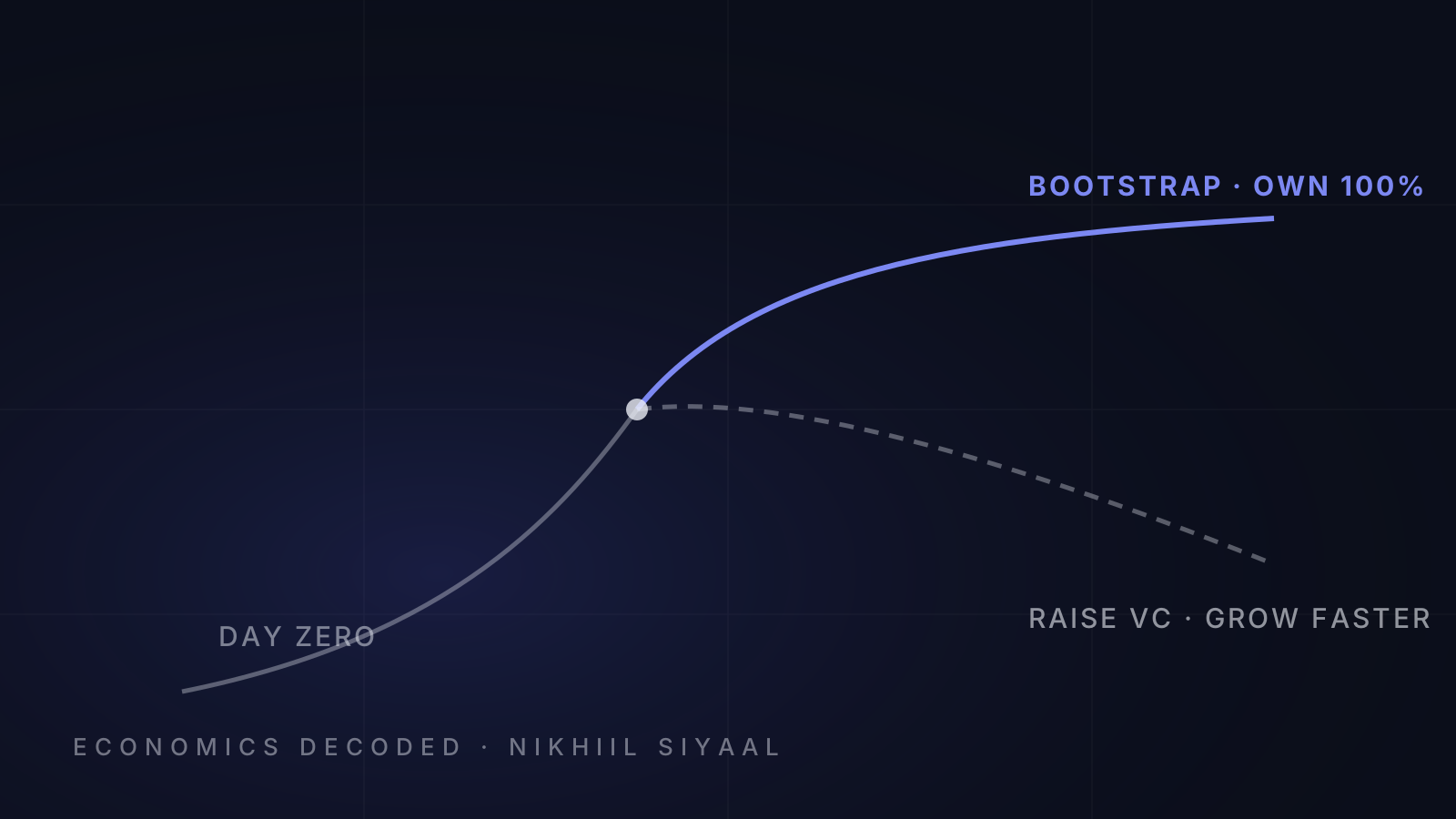
Ask five people whether to raise venture capital in India and you'll get ideology: hustle-culture bros telling you to bootstrap, ecosystem cheerleaders telling you to raise. Here's what you actually need: the arithmetic.
The only equation that matters
Your outcome as a founder is simple:
What you keep = exit value × your ownership at exit.
Bootstrappers own 80–100% of something that grows slower. Venture-backed founders often hold 10–20% by the time an exit happens, of something that - if everything works - grew much bigger. Both paths can win. The mistake is choosing one without doing this multiplication for your specific business.
Owning 100% of a ₹40 crore company beats owning 8% of a ₹300 crore one. Run your own numbers before someone else's narrative runs them for you.
When venture capital is the right tool
VC is rocket fuel, and rocket fuel is only useful on rockets. Raising makes sense when:
- The market is winner-takes-most and speed decides who wins.
- Your unit economics already work - capital multiplies a machine that's proven, it doesn't fix a broken one.
- You genuinely want the venture-scale outcome, with the board seats, dilution, and expectations that come with it.
When bootstrapping wins in India
India is one of the best places on earth to bootstrap: talent is world-class, costs are sane, and digital rails (UPI, WhatsApp, ONDC) hand you distribution that used to cost crores.
Bootstrapping fits when customers will pay from month one, when the niche is profitable but too small for a fund's maths, and when control matters to you - no one can force a pivot, a premature scale-up, or a sale.
The discipline it enforces is a feature, not a bug. When every rupee of growth comes from revenue, you can't afford the fake kind. Profitability isn't a milestone you defer; it's the default state.
The hybrid path nobody talks about
The real menu is bigger than two options. Bootstrap to proof, then raise from a position of strength - better valuation, less dilution, investors competing for you. Or fund the new venture from the last one's cash flows, which is exactly how I think about building a group of companies rather than a single bet.
Capital is a tool, not a scoreboard. The scoreboard is what you keep, and what you had to give up to keep it.
Three questions before you decide
- Does this market punish slowness - or punish burn?
- Will a customer pay me this quarter without a discount?
- Am I choosing this path, or performing it for LinkedIn?
Answer honestly and the funding decision mostly makes itself.
Wrestling with this decision for your own venture? Talk to me - I've sat on both sides of the table.

Serial entrepreneur · building companies, brands, and AI products.
Keep reading
How to validate a startup idea in India - before you build anything
Most startup ideas die from building too early, not too late. Here's the exact validation playbook I use: 100 conversations, 10 pre-orders, then - and only then - a product.
Brand buildingPersonal branding for founders: your story is a distribution channel
Founders treat personal branding like vanity. It's actually distribution - the cheapest CAC you will ever own. Here's how a founder's story compounds into customers, hires, and capital.
Startup demystifiedUnit economics, explained like you're a smart friend
CAC, LTV, contribution margin - the words sound scary. The idea behind them fits on a napkin. Here's the napkin.