How to validate a startup idea in India - before you build anything
Most startup ideas die from building too early, not too late. Here's the exact validation playbook I use: 100 conversations, 10 pre-orders, then - and only then - a product.
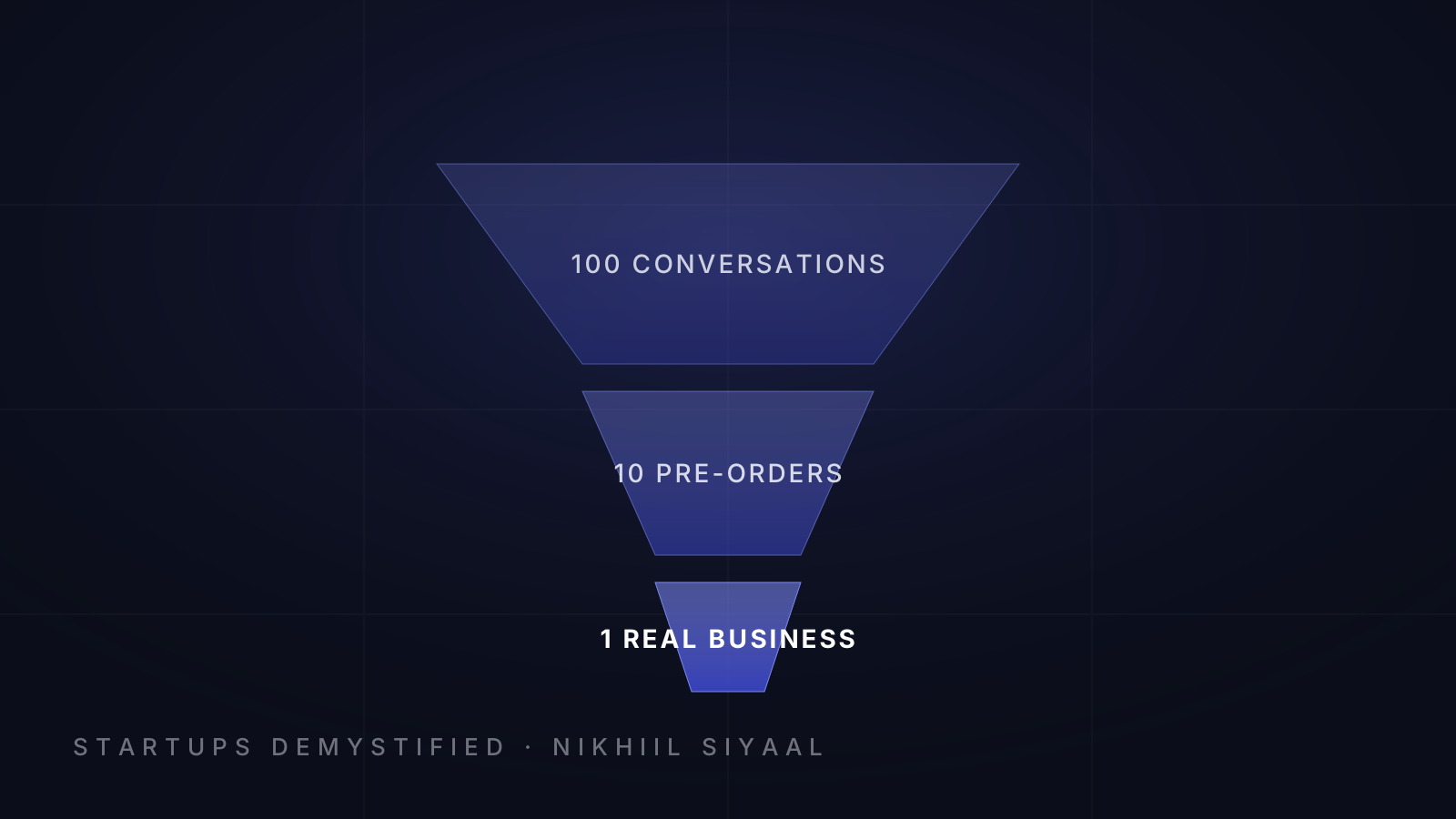
The most expensive mistake in startups isn't building the wrong feature. It's building anything before you know someone will pay. After five companies, my validation playbook fits in three numbers: 100 conversations, 10 pre-orders, 1 real business.
Why most startup ideas fail validation (and why that's good news)
An idea that dies in two weeks of conversations just saved you two years of your life. Validation isn't about proving your idea right - it's about trying hard to prove it wrong, cheaply. If it survives, you build with conviction. If it doesn't, you just got the cheapest education in India.
Step 1: Have 100 real conversations
Not surveys. Not a Google Form shared in family WhatsApp groups. Actual conversations with people who have the problem you think you're solving.
- Ask about their current behaviour, not their opinion of your idea. "How did you handle this last month?" beats "Would you use an app that…?" every time.
- People are polite. They will say your idea is great and never pay you. Past behaviour is evidence; compliments are noise.
- Write down the exact words they use. That language becomes your landing page, your ads, your pitch.
Step 2: Ask for money before the product exists
This is the filter most founders skip, because rejection stings. A pre-order, a refundable deposit, a signed letter of intent, an advance for a manual version of the service - any of these turns "nice idea" into data.
Ten strangers paying you ₹500 in advance is worth more than a thousand likes on your launch post.
In India especially, willingness to pay is the whole ballgame. Usage is easy to get; revenue is the real vote.
Step 3: Deliver it manually before you automate
Before we wrote serious code for any of my ventures, we delivered the service by hand - spreadsheets, phone calls, WhatsApp. It doesn't scale, and that's the point. You learn what the product must do by being the product.
Only when the manual version groans under demand do you earn the right to build. That's also when the unit economics become visible: what it truly costs to acquire and serve one customer.
The validation checklist I actually use
- Can I name 10 specific people with this problem - with phone numbers?
- Have 100 of their peers told me how they solve it today?
- Have at least 10 paid something, in advance, for my version?
- Can I deliver it manually this month?
- Do the napkin numbers work at full price, with zero discounts?
Five yeses? Build. Anything less, keep talking - or kill it and thank yourself later.
Building something and want a second pair of eyes on your validation? Reach out - I've buried enough ideas to know which ones deserve to live.

Serial entrepreneur · building companies, brands, and AI products.
Keep reading
Personal branding for founders: your story is a distribution channel
Founders treat personal branding like vanity. It's actually distribution - the cheapest CAC you will ever own. Here's how a founder's story compounds into customers, hires, and capital.
Economics decodedBootstrapping vs venture capital in India: the honest math
Raise VC or bootstrap? Most advice is ideology. Here's the actual arithmetic - ownership, growth speed, and exit outcomes - so you can pick the funding path that fits your business.
Startup demystifiedUnit economics, explained like you're a smart friend
CAC, LTV, contribution margin - the words sound scary. The idea behind them fits on a napkin. Here's the napkin.